|
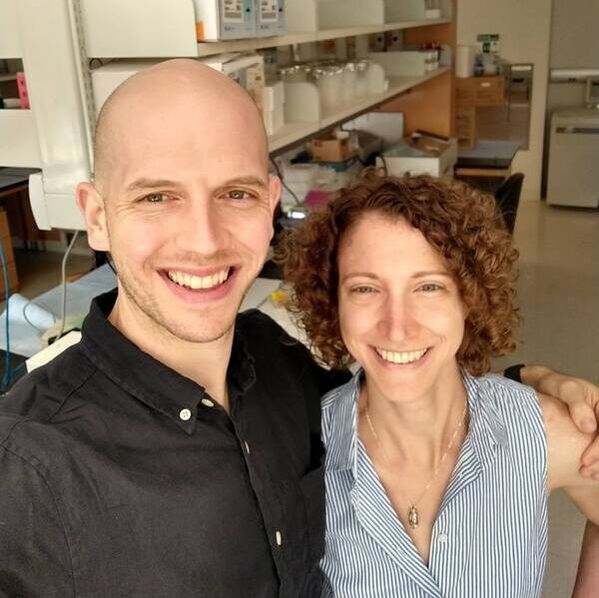
We are honored and extremely grateful to have received a 3-year research grant from the Whitehall Foundation to support our work on inhibitory transmission and sleep. The Whitehall Foundation funds basic research in neurobiology, and their support is crucial for many labs given the current funding environment. Thank you for supporting basic science, we can't wait to get to work on this project!
0 Comments
Graduate student Ben Menarchek published a review in Current Opinion in Neurobiology entitled "Latent Mechanisms of Plasticity are Upregulated During Sleep." Congratulations, Ben!
Check out our review article in Current Opinion in Neurobiology, examining the relationship between sleep, the E/I ratio, and autism spectrum disorder:
Bridi MCD, Peixoto L. Excitatory/inhibitory imbalance as a mechanism linking autism and sleep problems. Curr Opin Neurobiol. 2025. 90:102968. doi: 10.1016/j.conb.2024.102968. Check out our latest study in iScience, showing that sleep-dependent patterns of E/I regulation are altered in two mouse models of ASD:
Bridi MCD, Luo N, Kim G, Menarchek BJ, Lee RA, Rodriguez B, Severin D, Wesselborg C, O’Ferrall C, Patel R, Bertrand S, Kannan S, Kirkwood A. Daily oscillation of the excitation/inhibition ratio is disrupted in two mouse models of autism. iScience. 2025. 28(2):111917. doi: 10.1016/j.isci.2025.111917. Check out our latest publication in the Journal of Neuroscience, showing that both early closed eye depression and late open eye potentiation rely on GluN2B-containing NMDA receptors during ocular dominance plasticity:
Bridi MCD, Hong S, Severin D, Moreno C, Contreras A, Kirkwood A. Blockade of GluN2B-Containing NMDA Receptors Prevents Potentiation and Depression of Responses during Ocular Dominance Plasticity. J Neurosci. 2024 Sep 4;44(36). doi: 10.1523/JNEUROSCI.0021-23.2024 Bryan passed his preliminary exam and is now officially a doctoral candidate! Congratulations, Bryan!
Check out our new preprint, available on BioRxiv: GluN2B-containing NMDA receptors are required for potentiation and depression of responses in ocular dominance plasticity.
|


RSS Feed